15/09/2026
How are technological change, demographic shifts and labour-market transitions reshaping the skills workers need — and what can policymakers do to ensure that workers and firms are able to adapt?
These questions were at the centre of the TRAILS Conference on Occupational Mismatch and Skill Shortage, held on 10–11 September 2026 at the Museo Artistico Politecnico (MUSAP), Palazzo Zapata, in Naples, and hosted by the University of Naples Federico II.
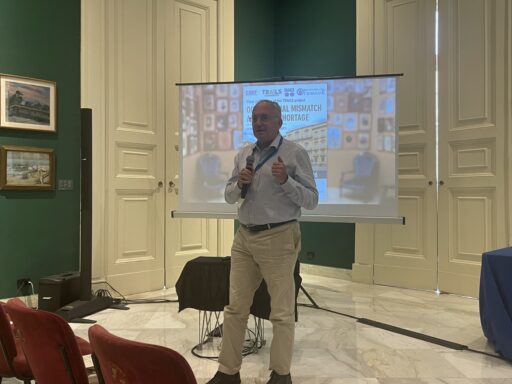
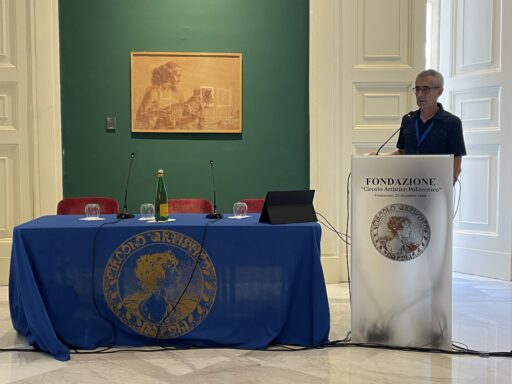
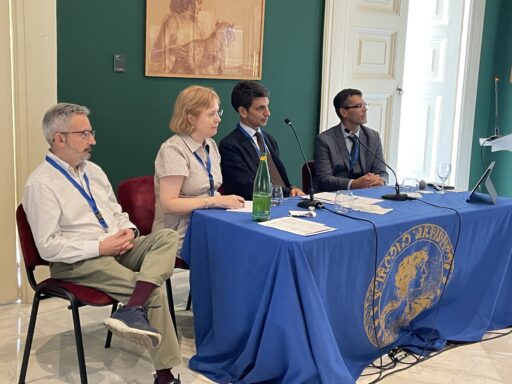
Bringing together more than 40 academics and experts from leading universities, research institutes, central banks and international organisations, the two-day conference examined the causes and consequences of skills shortages and occupational mismatch, while exploring how labour markets can respond to rapid technological transformation, changing patterns of work and demographic change.
The conference formed part of the final phase of the TRAILS project, which aims to improve understanding of skills shortages and mismatch and their implications for workers, firms and labour-market policy.
Understanding how technology is changing workers’ careers
The first conference session focused on Technology and Workers’ Careers, examining how technological developments are changing the way workers perform their jobs and move through the labour market.
Research presented by Lorenzo Incoronato (University of Naples Federico II, CSEF and ROCKWOOL Foundation Berlin), and co-authors examined whether the expansion of teleworking has changed workers’ career trajectories and the way workers and firms are matched. Evidence presented on the Netherlands suggested that workers in occupations with greater potential for teleworking were more likely to continue working from home or in hybrid arrangements after the COVID-19 pandemic. The research also pointed to differences in job mobility and occupational matching among workers whose skills were not fully aligned with their jobs.
The session also highlighted the importance of gender inequalities in the digital transformation of work. Adele Whelan, together with colleagues from the Economic and Social Research Institute (Ireland) and other institutions, presented research on the gender gap in digital skills at work.
The findings showed substantial gender differences in the use of advanced digital tasks across Europe, even after accounting for factors such as education, occupation and industry. While differences in fields of study and occupational roles explain an important share of the gap, significant differences remain, raising questions about task allocation, career progression and other barriers affecting women in highly digital roles.
The discussion highlighted the importance of policies that go beyond increasing average digital participation and instead support women in accessing and progressing in jobs characterised by high levels of digital intensity.
Skills mismatch in a rapidly changing labour market
The second session, Job Changes and Workers’ Match Quality, turned to the relationship between changing skill requirements, training and workers’ career trajectories.
Paul Redmond, Economic and Social Research Institute (Ireland) and co-authors presented research linking data on millions of job vacancies with European employee survey data to investigate how rapidly changing skill requirements affect skills mismatch. The research addresses a central challenge of technological transformation: as jobs evolve, workers may find that the skills they have acquired no longer correspond fully to the requirements of their occupation.
Training therefore becomes an important potential mechanism for helping workers adapt. The research explores whether training can mitigate the negative consequences associated with rapidly changing skill requirements and help maintain a better match between workers and jobs.
The session also examined the consequences of job displacement. Annalisa Scognamiglio (University of Naples Federico II and CSEF), together with an international team of researchers, presented evidence from employer–employee administrative datasets on the relationship between job loss, occupational match quality and wage losses.
Initial evidence from Portugal and Sweden highlighted substantial differences in the persistence of earnings losses following displacement. The research underlines the importance not only of whether workers find a new job, but also of whether they move into occupations that make good use of their skills.
Labour reallocation, spatial mobility and human capital
The third session, Reallocation and Spatial Frictions, examined how labour-market distortions and geographical constraints affect the allocation of workers and skills.
Andrea Locatelli (Bank of Italy),and co-authors explored the labour-market implications of so-called “zombie firms” — firms that remain active despite persistent financial difficulties. The research considers whether such firms may retain workers in relatively unproductive employment relationships, potentially limiting the availability of labour for healthier and more productive firms, particularly in geographically segmented labour markets.
Other research presented during the session examined human-capital misallocation and the spatial dimension of labour-market outcomes.
Damiano Raimondo (University of Warwick), and co-authors explored how differences in housing costs and productivity across locations can disproportionately affect younger workers. Productive cities often offer higher wages and stronger returns to experience, but also higher housing costs, potentially creating barriers to mobility and contributing to inequalities in access to productive labour markets.
The session also addressed the implications of skill uncertainty early in workers’ careers. Piero De Dominicis (Bocconi University) presented research examining how workers’ initial occupational choices can become path-dependent and how learning about their own skills may influence subsequent occupational mobility.
Together, the presentations highlighted that labour-market mismatch is not only a question of individual skills and jobs. Where workers live, where firms operate and how easily people can move between locations and occupations also shape how efficiently human capital is allocated.
Education, skills and the value of a good job match
The fourth session, Occupational Mismatch and Human Capital, focused on the relationship between education, skills and labour-market outcomes.
Lorenzo Navarini (University of Vienna and ROCKWOOL Foundation Berlin),examined the heterogeneous returns to different fields of study and the role of occupational mismatch. Their research suggests that the average return to higher education can conceal substantial differences between and within fields of study. A key factor is the quality of the match between graduates’ skills and their occupations.
The findings reinforce an important message for education and labour-market policy: the value of education is not determined by graduation alone, but also by what happens when workers enter the labour market and whether their skills are effectively used.
The session also considered why labour shortages do not always translate into higher wages, with Hannah Paule-Paludkiewicz (Deutsche Bundesbank),examining firms’ beliefs and hiring decisions in tight labour markets.
Keynote: supporting vocational students in the transition from education to work
A highlight of the conference was the keynote lecture delivered by Professor Pierre Cahuc of Sciences Po, who presented research on “Job Search Assistance for Vocational Students.”
The transition from school to employment remains particularly challenging for many vocational students, especially those from less advantaged backgrounds and those without strong professional networks.
Professor Cahuc presented evidence from a field experiment conducted in collaboration with the French public employment service. The programme provided vocational students with structured support covering topics including the labour-market system, identifying and presenting skills, job-search strategies, job interviews and contact with employers.
The research points to the potential value of providing job-search assistance before students leave education, rather than waiting until difficulties in the labour market have already emerged.
The keynote provided a direct link between the conference’s research agenda and a central policy challenge: how to make the transition from education to employment more effective, inclusive and responsive to the needs of both young people and employers.
From research to policy: the role of vocational education and training
The conference concluded its substantive programme with a high-level policy panel moderated by Ferdinando Giugliano (CEPR) and dedicated to vocational education and training (VET).
The panel brought together Konstantinos Pouliakas (CEDEFOP), Sandra McNally (University of Surrey) and Samuel Bentolila (CEMFI) to discuss the role of vocational education, apprenticeships and retraining in strengthening school-to-work transitions and helping workers adapt to changing labour-market requirements.
Samuel Bentolila presented evidence on the causal impact and mechanisms of dual VET in Madrid (Spain), highlighting the role of training-firm retention in shaping employment outcomes.
Sandra McNally emphasised the importance of thinking carefully about what retraining means and, crucially, whether training equips workers with skills that are actually in demand. The discussion also highlighted substantial variation in the benefits of apprenticeships across sectors and groups, underlining the importance of the quality of training opportunities alongside their availability.
Konstantinos Pouliakas brought a European perspective, drawing on CEDEFOP research on skills, artificial intelligence and changing tasks. Recent evidence indicates that AI is already becoming part of everyday work for a significant share of European workers, while many workers report that they need to further develop their AI-related knowledge and skills.
The discussion stressed that technological change is transforming tasks within jobs, rather than simply eliminating occupations. This creates an urgent need for effective upskilling and reskilling opportunities, as well as better information about changing skill requirements.
The panel also highlighted a persistent challenge for policymakers: how to close the gap between the training that workers need, the training that employers provide and the training systems that public policy supports.
Turning evidence into better policy
The discussions throughout the two days pointed to a common conclusion: occupational mismatch and skills shortages cannot be addressed through a single policy intervention.
Effective responses require action across education, vocational training, labour-market institutions and regional policy. They also require better data and stronger links between research evidence and policymaking.
As highlighted during the conference, labour markets are changing rapidly. Digitalisation and AI are reshaping tasks; demographic change is altering the supply of workers; and geographical and institutional barriers can prevent skills from moving to where they are most needed.
At the same time, mismatch is not simply a problem of workers lacking skills. It can also reflect the underutilisation of existing human capital, limited mobility, poor job design, inadequate management practices and difficulties in matching workers with productive opportunities.
The conference therefore provided an important forum for moving beyond the question of “Do workers have the right skills?” towards a broader question: “How can labour markets make better use of the skills that workers already have, while helping them acquire the skills they will need in the future?”
A platform for the TRAILS project
The conference brought together research from across Europe and beyond and demonstrated the breadth of the TRAILS research agenda — from digital transformation and teleworking to job displacement, vocational education, spatial mobility, human capital allocation and occupational mismatch.
It also reinforced the importance of connecting rigorous empirical research with the needs of policymakers and practitioners.
As the TRAILS project enters its final phase, the conference provided an opportunity to bring together emerging research findings and discuss how they can contribute to a more inclusive, productive and resilient European labour market. The central message from Naples was clear: as technology, demographics and economic structures continue to transform the world of work, understanding and addressing skills mismatch will be essential to ensuring that workers, firms and economies can successfully navigate the transition.

This project has received funding from the European Union's Horizon Europe research and innovation programme under grant agreement No 101132673